


 Company
 Technology
 News
News
 Careers
 ESG
ESG




Duckyang Industry, founded on July 11, 1977 in Ulsan—the cradle of Korea’s automotive industry—was established with a firm belief that “manufacturing, the foundation of national industry, drives the economy forward.” Since its founding, the company has built a sound and transparent management system guided by its core values: responsibility, creativity, and cooperation.
Duckyang Industry believes that the true value of a company lies in fostering outstanding technical talent with creative thinking and fulfilling its responsibilities to both the nation and local communities. This spirit is reflected in the company’s resilient response to the COVID-19 crisis, and in the strong sense of responsibility and proactive innovation demonstrated by its employees.
As a leading automotive parts manufacturer in Korea—especially in the fields of cockpit modules and door trims—Duckyang Industry continues to enhance its global competitiveness. In June, the company was selected for a national project on battery weight reduction for eco-friendly vehicles, in recognition of its technological excellence. The project approval was granted under the “Corporate Revitalization Act” by the Ministry of Trade, Industry and Energy.
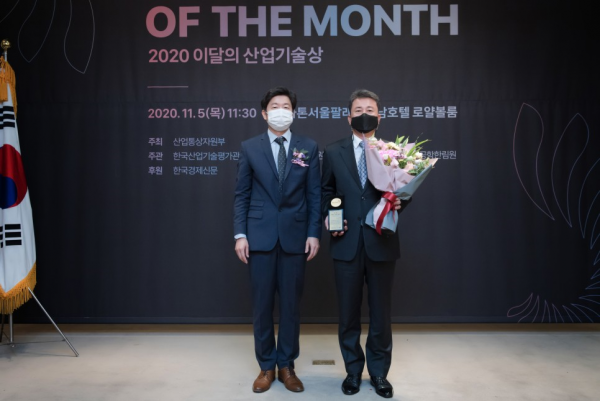
In November, Duckyang Industry was honored with the “Industrial Technology of the Month” Award, also hosted by the Ministry, for its development of advanced lightweight foaming materials that significantly reduce component mass—representing a world-first in technical innovation.
Since 2011, Duckyang Industry has proactively prepared for the electric vehicle era by developing battery module technologies. Today, the company is actively pursuing national R&D projects with its own roadmap focused on eco-friendly components, lightweight materials, electronics, and intelligent automotive parts for next-generation mobility. Looking ahead, Duckyang aims to drive future innovation by advancing integrated lighting-electronic modules and sustainable materials—including bio-based and recyclable materials—laying the groundwork for the next 30 years of growth.